
Why is services handled differently by venue?
Because venue manuals, load access, utility rules, and labor pathways vary from property to property, especially across convention centers, hotel campuses, and fairgrounds facilities.
Service Lines
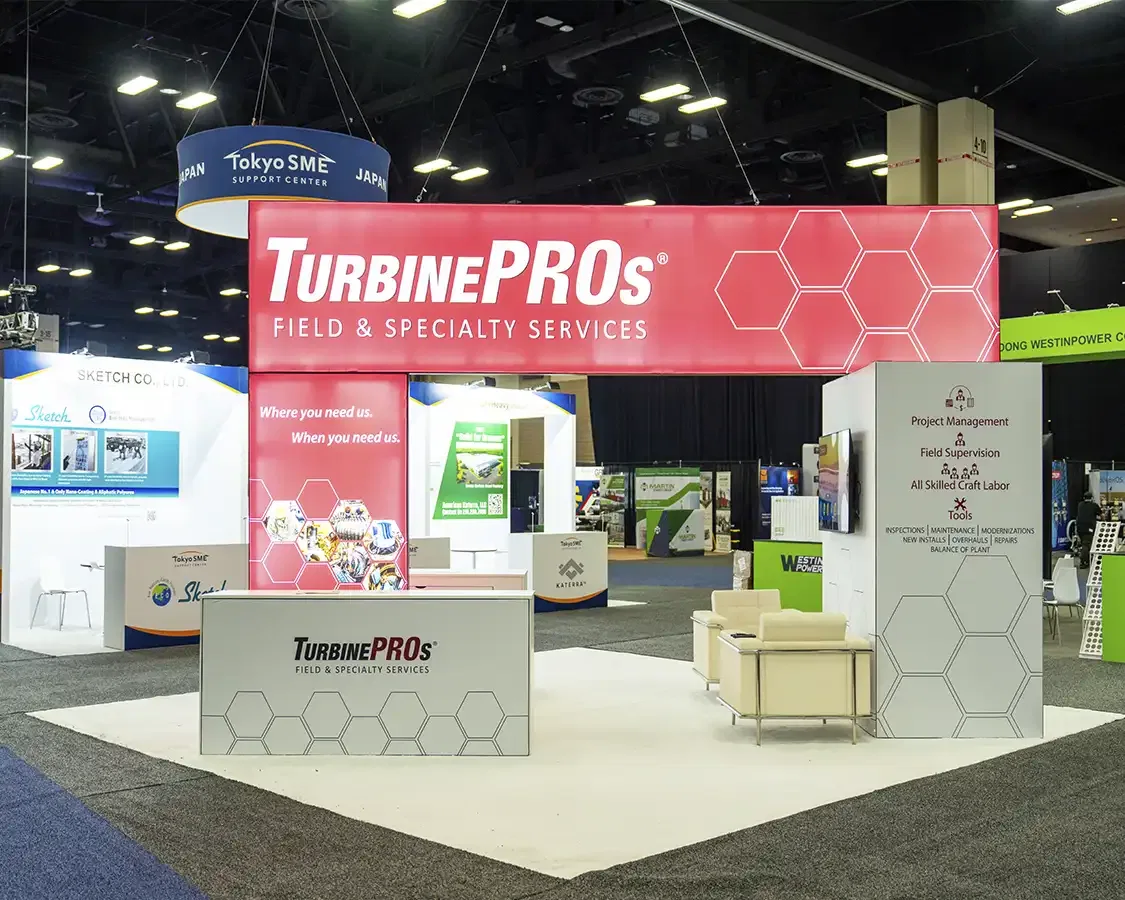
Booth strategy, fabrication, graphics, labor, AV, freight, utilities, exhibitor paperwork, and on-site supervision lined up against the actual Santa Clara show calendar.
Service Lines
Service scope
Trade Show Management treated as part of the production calendar, not a standalone line item bolted on after the venue is signed.
Service scope
Exhibit Program Management kept in line with graphics deadlines, AV scope, and how the booth needs to behave once doors open.
Service scope
General Contractor Services scoped against the exhibitor manual, freight calendar, and on-site supervision instead of a generic estimate.
Service scope
Exhibitor-Appointed Contractor Coordination set up so design, fabrication, and field crews are reading the same schedule from the first review.
Service scope
Trade Show Booth Design scoped against the exhibitor manual, freight calendar, and on-site supervision instead of a generic estimate.
Service scope
Custom Exhibit Fabrication scoped against the exhibitor manual, freight calendar, and on-site supervision instead of a generic estimate.
Service scope
Exhibit Rental Programs planned around venue approvals, install windows, and the show-week labor sequence Santa Clara programs actually run.
Service scope
Modular Exhibit Systems kept in line with graphics deadlines, AV scope, and how the booth needs to behave once doors open.
Service scope
Portable Trade Show Displays set up so design, fabrication, and field crews are reading the same schedule from the first review.
Service scope
Custom Booth Graphics and Printing planned around venue approvals, install windows, and the show-week labor sequence Santa Clara programs actually run.
Service scope
Installation and Dismantle Services treated as part of the production calendar, not a standalone line item bolted on after the venue is signed.
Service scope
Show-Site Supervision kept in line with graphics deadlines, AV scope, and how the booth needs to behave once doors open.
Service scope
Trade Show Labor Coordination planned around venue approvals, install windows, and the show-week labor sequence Santa Clara programs actually run.
Service scope
AV and Technical Production scoped against the exhibitor manual, freight calendar, and on-site supervision instead of a generic estimate.
Service scope
LED Video Wall Integration set up so design, fabrication, and field crews are reading the same schedule from the first review.
Service scope
Lighting and Power Distribution kept in line with graphics deadlines, AV scope, and how the booth needs to behave once doors open.
Service scope
Interactive Demo Environment Production planned around venue approvals, install windows, and the show-week labor sequence Santa Clara programs actually run.
Service scope
Conference Stage and Scenic Production kept in line with graphics deadlines, AV scope, and how the booth needs to behave once doors open.
Service scope
Registration and Check-In Environments planned around venue approvals, install windows, and the show-week labor sequence Santa Clara programs actually run.
Service scope
Sponsorship Activation Production set up so design, fabrication, and field crews are reading the same schedule from the first review.
Service scope
Brand Activation and Experiential Builds kept in line with graphics deadlines, AV scope, and how the booth needs to behave once doors open.
Service scope
Product Launch Environments planned around venue approvals, install windows, and the show-week labor sequence Santa Clara programs actually run.
Service scope
Roadshow and Mobile Tour Support treated as part of the production calendar, not a standalone line item bolted on after the venue is signed.
Service scope
Shipping, Drayage, and Material Handling planned around venue approvals, install windows, and the show-week labor sequence Santa Clara programs actually run.
Service scope
Advance Warehouse and Logistics Planning treated as part of the production calendar, not a standalone line item bolted on after the venue is signed.
Service scope
Exhibit Storage and Asset Management kept in line with graphics deadlines, AV scope, and how the booth needs to behave once doors open.
Service scope
Custom Crating and Asset Protection planned around venue approvals, install windows, and the show-week labor sequence Santa Clara programs actually run.
Service scope
Event Furniture and Lounge Environments planned around venue approvals, install windows, and the show-week labor sequence Santa Clara programs actually run.
Service scope
Conference and Venue Execution treated as part of the production calendar, not a standalone line item bolted on after the venue is signed.
Service scope
Digital Signage and Kiosk Integration treated as part of the production calendar, not a standalone line item bolted on after the venue is signed.
Service scope
Booth Refurbishment and Reconfiguration scoped against the exhibitor manual, freight calendar, and on-site supervision instead of a generic estimate.
Service scope
Show Services Paperwork and Compliance kept in line with graphics deadlines, AV scope, and how the booth needs to behave once doors open.
Trade show services in Santa Clara cover everything between the first creative review and the last pallet leaving the dock. Each line item carries its own deadlines, approvals, and failure modes, which is why the order of operations matters as much as the work itself.
Drawings drive electrical orders, electrical orders drive rigging, rigging drives install hours, and a single missed handoff pushes every downstream decision into overtime. Treating the services brief as a single calendar instead of a stack of vendor invoices is what keeps a launch week defensible.
Use the pages below to size the actual scope — including show-site supervision, exhibitor-appointed contractor coordination, and dismantle planning — against the venue, the show date, and the audience goal.
The Santa Clara Convention Center calendar currently lists programs such as Embedded Vision Summit, TieCon 2026, Anime Impulse, and Collectors Expo CX, confirming an active mix of conference, expo, and fan-event demand in the immediate market.
Official Santa Clara Convention Center room details and floor plans highlight a 22,398-square-foot Mission City Ballroom, 12 meeting rooms, four exhibit halls, and a 607-seat theater.
Services decisions rarely fail because the tactic is wrong in theory. They fail because the venue, load path, labor paperwork, or overnight reset requirement was treated like a generic market constant instead of a building-specific condition.
The pages in this section are organized to help exhibitors and planners match scope to the actual venue behavior, district traffic, and timeline pressure described in the source material for Santa Clara, CA.
The Santa Clara Convention Center cluster concentrates Silicon Valley convention traffic, show-floor utilities, and connected hotel demand around Mission College Boulevard and the Great America corridor. Hotel-led work in Sunnyvale and Mountain View often behaves more like fast room-set conversion than giant-hall buildout. Stadium and museum work shifts the emphasis again toward access control, larger footprints, and multi-building movement.
That is why this section does not flatten the market into a single citywide process. Each page keeps the venue and district context visible so schedules, staging, and support assumptions stay realistic.
Every page in this section is anchored to documented venue facts, official destination resources, and market research signals rather than filler copy. When a hard fact was not available in the bundle, it was left out instead of improvised.
That keeps the section useful for real planning, especially when stakeholders are comparing downtown venues, airport-adjacent hotels, and regional expo campuses that look similar on a map but behave very differently on show week.
Planner questions
Because venue manuals, load access, utility rules, and labor pathways vary from property to property, especially across convention centers, hotel campuses, and fairgrounds facilities.
The practical differences are usually freight routing, available staging space, venue-run service structures, and whether the event behaves like a convention-floor program, a ballroom conversion, or a regional expo.
No. the guidance stays venue-driven and market-specific so the scope can flex around the actual building, event format, and published operating rules.
Venue name, dates, exhibitor manual or venue planning packet, booth or room footprint, freight assumptions, and any requirements for utilities, hanging elements, or overnight turnovers.
Project brief
Use the pages in this section to line up the right scope, paperwork, staging sequence, and support assumptions before move-in starts compressing decisions.