
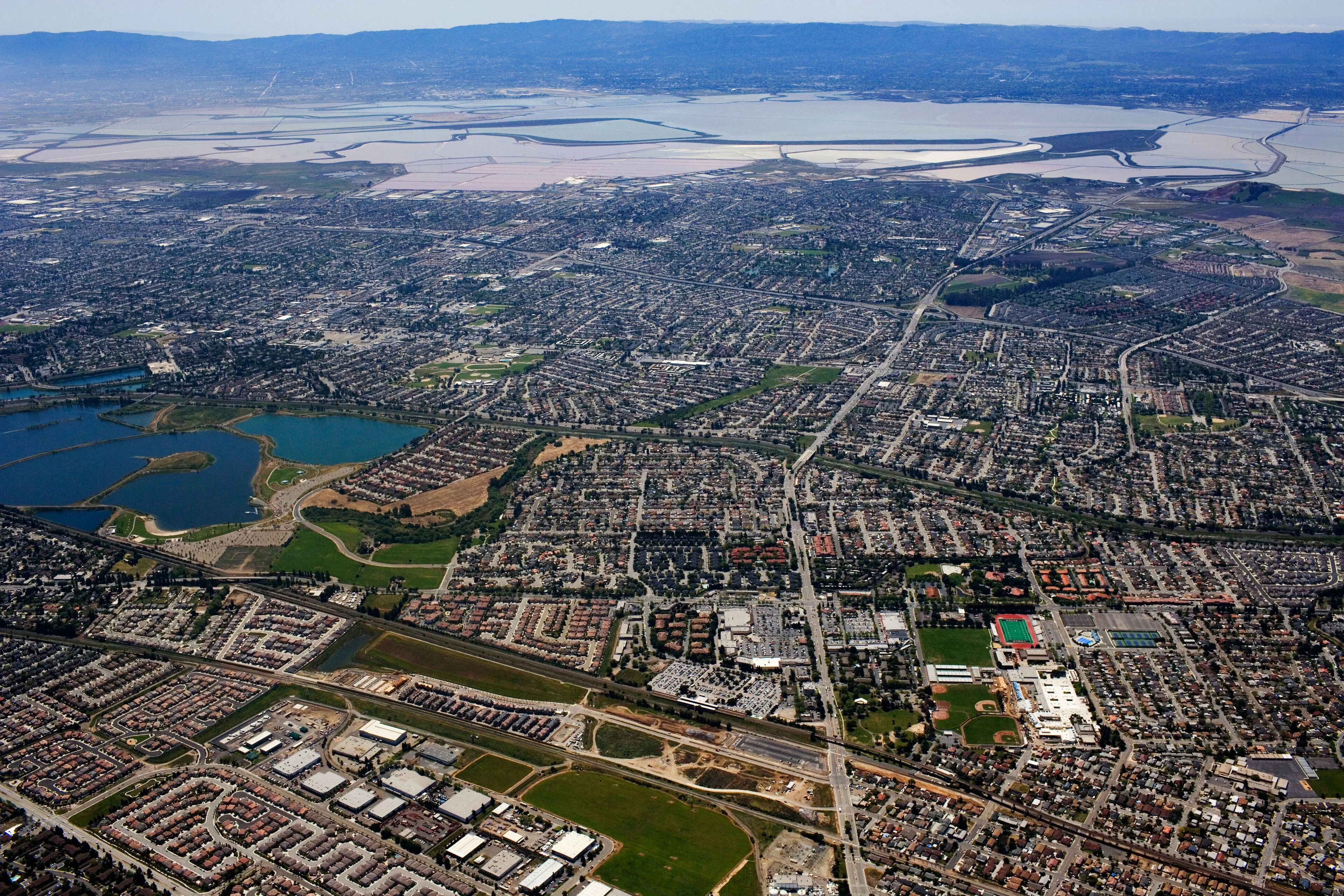
Union City sits between Fremont and Hayward along the I-880 corridor, and unlike its more industrial neighbors it reads as a residential suburb first, with a mix of single-family neighborhoods, the Union Landing retail center, and a downtown that grew up around transit access rather than manufacturing.
The Union City BART station is the city's defining piece of infrastructure, a major stop on the Fremont line that also connects to Dumbarton Express bus service toward the Peninsula, making Union City a genuine transit hub even though it has no exhibit venue of its own.
No fixed show venue sits in Union City, so this guide treats it honestly as a residential and transit-access city that feeds crew and staff into the Santa Clara and San Jose venue corridor, rather than claiming a local venue that does not exist.
Key focus areas
- Union City BART as the practical transit spine for crew commuting south
- Dumbarton Express bus service linking Union City to the Peninsula
- I-880 driving time from Union City into Santa Clara and San Jose
- Union Landing as a local landmark, not a logistics or venue asset
- Union City's residential character versus Fremont and Hayward's industrial base
Union City has no exhibit venue of its own
Like its East Bay neighbors on this list, Union City hosts none of the venues this site tracks. The Santa Clara Convention Center, Levi's Stadium, and the San Jose McEnery Convention Center all sit south, so a Union City-based exhibitor or crew member is always commuting toward the venue, not hosting one locally.
What makes Union City different from Fremont or Newark is that it is primarily residential, so its role in a show's logistics is less about warehouse staging and more about where crew and staff actually live and how they get to work on show days.
Union City BART as the transit backbone
The Union City BART station sits on the Fremont line and gives residents a direct rail connection into the wider Bay Area system, though like the rest of the East Bay BART line it does not run straight into downtown San Jose or the Santa Clara venue corridor without a transfer or a final rideshare leg.
For crew who live in Union City and work Santa Clara-area shows, BART is most useful for the commute segment toward Fremont or onward transfers, with the last stretch into Santa Clara typically covered by car, rideshare, or an employer shuttle rather than a single continuous rail trip.
Dumbarton Express and the Peninsula connection
Union City is a stop on Dumbarton Express bus routes that cross the bay via the Dumbarton Bridge toward the Peninsula, giving Union City residents without a car a transit option toward Peninsula venues such as the South San Francisco Conference Center that Fremont and Newark residents share as well.
That bus service runs on a fixed schedule geared toward commute patterns, not show call times, so any crew planning to rely on it for a Peninsula-bound show day should check timetables well in advance rather than assume a bus will be available at an odd early-morning load-in hour.
The drive south into Santa Clara and San Jose
For crew driving rather than taking transit, I-880 south is the direct route from Union City into the Santa Clara and San Jose venue corridor, typically a thirty-to-forty-minute drive outside peak hours, similar to the trip from neighboring Fremont and slightly shorter than from Hayward further south.
That corridor carries a steady mix of commuter and commercial traffic through Fremont's industrial belt before reaching Santa Clara, so a Union City crew departing during the morning commute should expect the trip to run closer to fifty minutes than the off-peak thirty.
Union Landing and Union City's commercial core
Union Landing, a large retail center near I-880, is the closest thing Union City has to a commercial hub, offering the kind of everyday retail and dining a crew staying locally might use, but it carries no meeting space, exhibit hall, or hotel block relevant to show logistics.
Downtown Union City, built up around the BART station in recent years with new residential and mixed-use development, reflects the city's broader shift toward being a transit-oriented suburb rather than an industrial or event destination, which is consistent with its lack of any exhibit venue.
A residential base for crew, not a staging city
Because Union City is largely residential, it functions less as a freight staging point than Fremont or Newark and more as a place where local crew and part-time show-site staff actually live, commuting into Santa Clara for the workday rather than storing equipment locally.
That distinction matters for planning: a Union City address on a crew roster usually means a commute logistics question, not a warehouse or drayage question, and staffing coordinators should treat it accordingly when building call sheets for a Santa Clara show.
It also means show-site staffing agencies pulling from the East Bay labor pool often find a disproportionate share of local hires living in Union City precisely because of the BART station, so a Santa Clara-area show with a large local-labor need benefits from treating Union City as a recruiting radius in addition to a routing point.
Hotel supply is limited
Union City carries a modest hotel supply concentrated near I-880, smaller than what is available in Fremont or Hayward, so it is rarely the first choice for a crew looking for an East Bay overnight base ahead of a Santa Clara show, even though it sits at a reasonable distance.
Crews who do lodge in Union City tend to be there for proximity to BART rather than proximity to the venue, using the station as a way to avoid driving into Santa Clara directly, though that tradeoff only makes sense if the show's schedule allows for the transfer time BART requires.
Comparing Union City to its East Bay neighbors
Where Fremont offers Tesla-scale industrial capacity and Newark offers Dumbarton Bridge-adjacent warehouse space, Union City offers neither in any meaningful volume; its value to a Santa Clara-area show is almost entirely about transit access and crew housing rather than freight staging.
That makes Union City a reasonable place to look for local hires or part-time show-site labor with a manageable commute, but not a place to plan freight consolidation or overnight truck staging the way a coordinator might in Fremont or Newark.
Building a realistic Union City logistics plan
For crew based in Union City, the practical plan is to confirm whether BART plus a final rideshare leg or a direct I-880 drive gets them to a Santa Clara call time more reliably, and to build the schedule around whichever option holds up better during actual commute-hour conditions.
Because Union City hosts no venue and limited freight infrastructure, its role in any show plan stays narrow but useful: a source of local labor and a transit-connected suburb along the route between the Dumbarton Bridge and the Santa Clara venue corridor, not a staging or storage city.
Coordinators building a multi-day show schedule around Union City-based staff should also confirm BART's operating hours against the show's actual call times, since early move-in shifts can start before the first trains run, which pushes some crew back toward a car or rideshare option regardless of preference.
Frequently asked questions
Does Union City have a convention center or exhibit venue?
No. Union City hosts no venue on this site's list. It functions as a residential and BART-connected suburb feeding crew and staff into shows held in Santa Clara and San Jose.
Can Union City BART get crew directly to a Santa Clara venue?
Not in a single ride. BART's Fremont line runs through Union City but does not reach downtown San Jose or Santa Clara without a transfer or a final rideshare or shuttle leg to the actual venue.
What is Dumbarton Express bus service used for from Union City?
It connects Union City to Peninsula destinations across the Dumbarton Bridge, useful for crew without a car heading to a venue like the South San Francisco Conference Center, though it runs on a commute schedule rather than show call times.
How long is the drive from Union City to Santa Clara?
Roughly thirty to forty minutes via I-880 outside peak hours, close to fifty minutes during the morning commute, similar to the trip time from neighboring Fremont.
Is Union City good for freight staging like Fremont or Newark?
Not really. Union City is primarily residential with limited warehouse capacity compared with Fremont or Newark, so it works better as a source of local crew and commuting staff than as a freight consolidation point.
Is there enough hotel supply in Union City for crew lodging?
It is modest, smaller than Fremont or Hayward, concentrated near I-880. Crews who stay in Union City usually do so for BART access rather than proximity to the actual Santa Clara venue.